Search Results
Results found for empty search
- All about Spanish Gazpacho soup
A classic Spanish soup, with its own Guinness world record. Not only is Gazpacho delicious, it surely knows how to be famous. Gazpacho is more of a chilled drink than a soup, served in frosted glasses or poured over ice, and can be served as a starter, main dish, or tapa. A real treat in the summer heat. Not only are Gazpacho a must-try delight, but it's also incredibly easy to make and only gets better if you make it in advance. The perfect dish to make with your over-ripe tomatoes. What is Gazpacho? Gazpacho is a cold tomato soup, made from various raw vegetables, olive oil, vinegar and water. The vegetables usually consist of ripe tomatoes, cucumbers, bell peppers, onions and garlic, but different seasonal vegetables and herbs could be added as well. Its colour varies from pale orange to red, depending on whether the tomatoes that are used are more or less ripe. Stale bread is often used to thicken the soup and make it more substantial as a meal, or bread could be used to dip in the soup. Different toppings are sometimes added as well. Gazpacho can be served as a starter, main dish, or tapa and is usually served ice cold in the hot summer months. Traditionally, Gazpacho was made by pounding the vegetables in a mortar with a pestle, but nowadays a mixer or blender is used to make the soup extra smooth. Today, Gazpacho is available to buy premade in stores in many places around the world. Perfect as a light lunch or a midday snack. Healthy, and most of them low in calories, this soup is a good option if you don't want to bother with making your own. The History of Gazpacho Gazpacho is sometimes called Andalucían Gazpacho, which refers to its believed origin, the autonomous region of Andalucía in the south of Spain, even though it is still uncertain. In Andalucía, there is an abundance of olive oil and fresh vegetables, perfect for making Gazpacho. That's one of many reasons why the soup is likely to have been invented here. Gazpacho is likely to predate the founding of the region of Andalucía and was either invented during the Arabic or Roman reign, but still probably in the same region as today's Andalucía. The main ingredients back then were broad bean flour, oranges and almonds and did not include tomato among its ingredients until the colonization of America. Guinness Book of Records, the world's biggest Gazpacho There is a Guinness book record for the largest Gazpacho ever made. This record was set in 2019, in the city of Almería, in southeast Spain. The Gazpacho was made as a fundraiser for the Association of Children with Disabilities of Almería (ANDA) and the Spanish Association Against Cancer (AECC). Unica Group company, which held the event and holds the record, raised a whopping 18,252 euros for the two organisations and more than 10,000 people gathered at the event. The Unica Group company record is 9,800 litres of Gazpacho. To say the least, a heck of a lot of vegetables were needed to make this enormous soup. If you ever wish to recreate the world record-holding Gazpacho, this is what you need to put on your shopping list: 6,000 kilos of tomato 300 kilos of red pepper 200 kilos of onion 200 kilos of cucumber 1400 litres of water 550 litres of virgin olive oil 350 kilos of ice. And don't forget to invite 10,000 people and get enough cups for everyone... Recipe for normal-sized Gazpacho If you're not planning on breaking a world record, but still want to enjoy a glass of cooling Gazpacho, this is the recipe to go with. Super easy to make and feeds 4 people. Make the Gazpacho at least a couple of hours before serving or preferably the day before to bring out the flavours. If you wish to make it a more filling soup, just add some white bread or pieces of baguette to the blender. You need: 100 grams of fresh onion 2 garlic cloves 1 small cucumber 2 small red bell peppers 1 kg ripe tomatoes ½-1 teaspoon of white wine vinegar 1 tablespoon of virgin olive oil Salt and black pepper to taste How you make it: Chop all the vegetables, onions and garlic into cubes and add to a blender. (If you wish for a milder taste, fry the onion and garlic before adding them to the blender) Blend until the soup is smooth. Add salt, pepper, olive oil and vinegar and taste. If the soup is too thick, you can add some water to loosen it. If you wish the soup to be thicker, you can add pieces of stale bread to the blender. Place the soup in the refrigerator for a couple of hours or overnight. Serve cold or poured over ice. Optional topping There are different toppings and ingredients you can use to make your soup thicker and more filling as well as to bring some extra flavours to the soup. Using bread as a thickener is a common and popular choice or you can add boiled egg, serrano ham, canned tuna or just some basil to bring something extra to the dish. Either serve the soup cold, straight from the refrigerator och poured over some ice to make it super fresh. The soup is usually served in a glass or a chilled ceramic cup to keep the soup extra fresh, but you can use a deep dish as well if you want to dip some baguette or slices of bread in the soup.
- Goat cheese and serrano ham salad with baby potatoes and asparagus
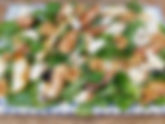
This filling salad is great as a meal on its own and simple to make. Fresh flavours of spring salad with asparagus meet salty ham and cheese. This luxurious and creamy salad is the perfect way to keep your energy up on hot summer days. This recipe feeds two persons. You need: 100g of fresh green asparagus cut into bite-size pieces 100 g of fresh goat cheese 50 grams of Spanish serrano ham in thin slices Iceberg lettuce 12 cocktail tomatoes 4 slices of sun-dried tomatoes in oil 1/4 of a white onion 2 spring onions 8 slices of cucumber 2 teaspoons of olive oil 1 teaspoon of red wine sherry vinegar a pinch of freshly ground black pepper 1 teaspoon of lemon juice A pinch of sea salt 200 grams of baby potatoes 1 teaspoon of capers 1/2 a teaspoon of rosemary 1/2 a teaspoon of thyme 1 small garlic clove How to make it: Clean and cut the baby potatoes into bite-size pieces, halves or quarters. Leave the skin on. Heat a skillet or pan with olive oil to medium heat. Peel the garlic and add it to the oil. When the oil is heated and the garlic is browned. Remove the garlic and add the potatoes to the pan. Stir the potatoes frequently. When the potatoes are done, add the thyme, rosemary and a pinch of salt and fry for another minute to release all the fragrance from the herbs. Transfer the potatoes to a plate and set them aside to cool slightly. Clean the pan with a paper towel and add oil and asparagus to the pan. Fry the asparagus until softened and add lemon juice and a pinch of salt. Transfer the asparagus to the plate with the potatoes. Cut up the salad and cucumber into chunks, cut the cocktail tomatoes in halves and place them in a bowl. Cut the onion into half circles and the green part of the spring onion into slices. Add them to the salad bowl. Cut the sun-dried tomatoes and goat cheese into small pieces and add to the plate with asparagus and potatoes to warm up and slightly melt. Combine the fresh salad, potatoes, cheese and asparagus and transfer to serving plates. Garnish with serrano ham, capers, freshly ground black pepper a drizzle of sherry vinegar and olive oil. Serve directly, slightly warm and preferably with a glass of Spanish wine.
- Recipe for fig, pear and Gorgonzola salad with walnuts
This summer and autumn salad is quick and easy to make and a true delight for all gorgonzola lovers. Just add the ingredients and serve, simple as that. Perfect for hot summer days, when you want a refreshing and slightly salty salad. This salad should be thrown together direct before serving after your guests have arrived, and eaten straight away. This recipe only takes a few minutes and is great as a centrepiece and a sharing platter. You need: 2 handfuls of watercress 1 handful of arugula/rocket salad 4 fresh figs ½ of a pear 100 grams of Gorgonzola cheese 1 teaspoon of olive oil A drizzle of balsam vinegar reduction Flaks of sea salt A handful of walnuts Freshly ground black pepper How you make it: Add the salad leaves to a mixing bowl. Quarter the figs and cut the pears into thin slices and add them to the salad bowl. Drizzle the olive oil on the salad and mix gently until combined. Place the salad nicely on a serving plater or a wooden chopping board. Break or cut the Gorgonzola cheese into bite-size pieces and place them on top of the salad. Add the walnuts on top of the salad and a sprinkle of sea salt and freshly ground black pepper. Serve right away as a starter or as an accompaniment to main dishes. Enjoy with a glass of wine.
- Vegan herby potato salad recipe
This herby vegan potato salad is a fresh and spring-like dish, perfect on its own or as a condiment to meats and fish dishes. Great on its own or as a side dish or accompaniment for the garden party, summer picnics and barbeque. This vegan recipe is perfect to make ahead and serves 4 people. For the salad you need: 800 grams of baby potatoes 100 grams of broad beans, green beans or sugar snap peas 100 grams of radishes 1 small red onion ½ white onion The green parts of 2 spring onions For the dressing you need: 3 teaspoons of capers ruffly chopped 1 tablespoon of finely chopped flat-leaf parsley 2 tablespoons of finely chopped dill 2 tablespoons of finely chopped chives The zest of ¼ lemon ½ teaspoon of lemon juice 1 teaspoon of vinegar 1 teaspoon of French Dijon mustard 3 tablespoons of virgin olive oil 1 teaspoon of salt A pinch of black pepper and white pepper How you make it: Clean the potatoes and beans, but keep the skin on. Cut the potatoes and beans into bite-size pieces. Add them to a pot of water and boil over medium heat until tender. If you use sugar snap peas you should add them raw to the salad. Depending on the size and type of potatoes, you might need to boil them and the beans in different pots to make sure one isn't over or undercooked. When cooked, rinse in cold water and set aside in a bowl to cool completely. Chopp the red, white and spring onions as well as the radishes and add to the potato bowl. Set aside and start making the dressing. Chop the herbs and capers and add them to a small bowl. Add lemon zest, lemon juice, mustard, olive oil, salt and pepper to the small bowl with the herbs and stir until combined. Taste and check that it is well seasoned. Pour the dressing over the potato salad and stir gently until combined. Serve cool, as it is or as an accompaniment to meat or fish dishes. This salad can be made in advance and only gets better if it sits in the fridge for some time before serving.
- Easy recipe for Potato and leek soup
Potato and leek soup is the perfect autumn soup. It is a rich, warming, hearty soup and best of all, it's super easy to make. A good filling option as the main course or as a starter. For a vegan version use olive oil and dairy-free cream and creme fraiche. Potato and leek soup freezes well, so you can make a big batch or make the soup in advance and put it in the freezer. This recipe feeds 4 people as a main course or 8 people as a starter. You need: 1 kg potatoes 250 grams of leek (only the white part of the leek) 2 ml Cooking cream 200 ml creme fraiche 3 vegetable bouillon or chicken bouillon cubes 1 teaspoon of Tabasco 1 1/2 teaspoon of white wine vinegar 2 tablespoons of butter Salt and black pepper after taste 50 ml finely chopped parsley About 700 ml of water Some extra creme fraiche for garnish How you make it: Clean and cut the leek into small pieces. Peel the potato and cut it into small cubes. Add the butter and the leek to a pot on the stove. Cover with a lid and let the leek sweat in the butter until completely translucid and slightly caramelised. Stire once in a while to make sure the leeks don't burn. Add the potatoes and the bouillon cubes to the pot and pour in water until the leek and potatoes are just covered. Add the lid back on and let the potatoes and leek boil until completely done. Add the cooking cream, creme fraiche, salt, pepper, vinegar, and most of the parsley and Tabasco to the pot and blend the soup until completely smooth. Taste and make sure the seasoning is good. Pour the soup into the serving bowls and add the rest of the creme fraiche and parsley to each bowl. Serve the soup as it is, or with slices of bread, croutons or topped with bacon.
- Baked Potatoes with creamy shrimp filling
Baked Potatoes with a creamy shrimp filling is a hearty dish that is easy to make. The filing only takes a couple of minutes to make and the potatoes bake in the oven for about one hour. Great to pop in the oven and relax for an hour or for you to get ready before your guests arrive. A refreshing creamy filling with sour crème Fraiche and the herbal flavour of dill and chives combined with fluffy warm potatoes and crispy skins are a true delight and loved by adults as well as most children. You don't need to buy special baking potatoes, although they are quite large and have great taste and an extra soft middle. Any large potato is good for baking, but the fluffiness of the potato's flesh can vary quite a bit. The potatoes can also be baked in a microwave oven, for 15-25 minutes, but then you miss out on the brown, crispy skin. You need: 4 large potatoes, about 350-450 grams each 300 grams of peeled, boiled shrimp 200 ml of creme fraiche 1 tablespoon of mayonnaise 150 grams of canned white asparagus 2 teaspoons of lemon juice 50 ml of finely chopped dill 50 ml of finely chopped chives ½ a small red onion 2 large boiled eggs 4 dollops of butter Barbeque spice Salt and white pepper after taste How you make it: Preheat the oven to 225 degrees Celsius. Wash the potatoes and poke them a couple of times with a fork or skewer. Add some salt to the potatoes to make them extra crispy and delicious when baked. Put the potatoes on the oven rack and bake in the middle of the oven until soft. About 50-70 minutes depending on their size. Hardboil 2 large eggs, peel and slice them and set them aside for the topping. If needed, boil, deshell and clean the shrimps. Remove the black vein that runs along the back of the shrimp. Finley chop red onion, dill and chives. Cut the shrimps into bitesise pieces. Add the herbs, onion and shrimp to a blow. Add the creme fraiche, mayonnaise, lemon juice, salt and black pepper to the bowl and stir until well combined. When the potatoes are soft, and the skin has turned dark brown, take them out and white a knife, cut a cross in the middle of the potatoes and press down on the sides to open up the potatoes. Scoop out some of the insides of the potatoes to make room for the filling. Add a dollop of butter to the potatoes and sprinkle in some barbeque spice. Add the shrimp filling to the potatoes and top with the asparagus and slices of egg. Serve piping hot with a cool beverage.
- All about Pimientos de padrón
This week we are all about Pimientos de padrón. Hot or sweet, you won't know until you try them. Try our easy Pimientos de padrón fritos recipe. Fried peppers are a delicious Spanish appetizer that is easy to make at home. Pimientos de padrón also known as Padrón peppers can be sweet or hot and you won't know until you try them. This has given rise to the funny Galician aphorism "Os pementos de Padrón, uns pican e outros non" which is directly translated to "Padrón peppers, some are hot, some are not". Under European Union law Padrón peppers have a Protected designation of origin under the name "Pemento de Herbón" since 2010. Padrón peppers are nowadays grown all around the Mediterranean and US, but the taste can differ quite a bit from the "Pemento de Herbón". So if you have the chance to put your money on the real deal, it will be worth it. Padrón peppers are smaller and have a sweeter flavour or a hot kick compared to bell peppers. They have been cultivated since the 17th century, originally from the town of Padrón, which is situated on the west coast of Spain near Santiago de Compostela. Padrón peppers have an elongated shape and a thick skin. They grow on vines that climb up to 10 meters high and they are usually picked when the pepper is immature and green. Lets talk about Pimientos de padrón fritos Pimientos de padrón Fritos, translates to fried Padrón peppers and are a delicious Spanish appetizer usually served as a tapa or a snack. Easy to make at home and a perfect salty treat for any time of the day. Pimientos de padrón fritos are an appetizer originating from the Galicia region of Spain. This dish has been eaten in Spain for centuries. With their hot or mild flavours and crunchy texture, they are an absolute favourite as a starter, snack or as part of a tapas meal. Traditionally, they were fried in olive oil but today they can also be deep-fried or fried in other oils such as sunflower or corn. After frying the peppers are topped with salt which gives the dish a wonderful crunchy texture. This dish is a must-try if you are visiting Spain, but you can also make them at home. It is super easy and well worth a try. Pimientos de padrón fritos recipe You need: 300 grams of padrón peppers Olive oil for frying Salt How you make it: Heat olive oil in a skillet over high heat. When you see that the oil is hot enough, add the padrón peppers and lower the heat medium. Leave the peppers for a few minutes, turning them with a wooden spoon. After a few minutes, you will see that the skin is separating from the pepper, with small bubbles, and that they are acquiring a darker tone. Remove them from the oil and leave them on absorbent paper and top them with sea salt after taste. Enjoy on their own, with slices of baguettes, as part of a tapas meal and of course served with a great Spanish wine or beers.
- Vegan chocolate and coconut balls
Super easy no-bake, bite-size chocolate delights flavoured with coconut and coffee. Quick to make and great to make together with children. This recipe makes about 15-20 bitesize chocolate balls that keep in the refrigerator for a week, but they will probably be devoured within the first day. A super easy vegan treat for all chocolate lovers, that only takes about 5 minutes to make! You need: 100 grams of room-tempered margarine /dairy-free butter 75 ml white sugar 4 tablesoppns of 100% cacaopouder 2 teaspoons of strong, cold espresso coffee 250 ml rolled oats/oats flakes 100 ml of coconut flakes How you make them: Beat the margarine and sugar into a smooth consistency. Add the cacao powder, the cold coffee and the rolled oats and stir until well combined. Pour out the coconut flakes on a large plate. Make 15-20 small balls out of the mixture and roll dem in the coconut flakes until completely covered with coconut. Put the chocolate and coconut balls in the refrigerator for at least 30 minutes to firm up. Serve them as they are or place them in mini muffin cups. Enjoy with a cup of coffee.
- La Taverna Dei Sapori, an authentic Italian Family-style restaurant
Praised for their quality dishes and excellent service, La Taverna Dei Sapori makes some of the best Italian food on the Spanish coast. Owned and run by Tino and Antonella, this Italian couple turned their lifelong passion for great food, made with fresh produces and lots of love, into a true success story. The restaurant is cosy and corky, full of personality with little things and souvenirs regular customers brought as gifts. La Taverna Dei Sapori translates to ”The Tavern Of Flavors” and they keep true to their name. ”The name says it all. It is all about fresh, flavourful food and classic family-style dishes. Only good food, made with lots of love” Tino and Antonella explain. They want their restaurant to have a family feel to it. To be a place for locals and tourists alike, where people can come for great food and feel at home and be greeted as a part of the Italian family. So far the restaurant has hosted celebrations of all kinds, all with a family feel to them, from birthdays and anniversaries to weddings. No matter the occasion, La Taverna Dei Sapori will make their customers feel like they are one of the family. La Taverna Dei Sapori opened its doors in Spanish costa del sol seven years ago The award-winning family-style Italian restaurant La Taverna Dei Sapori, opened its doors on the sunny Spanish costa del sol, seven years ago. They chose the little cosy town of Arroyo de la Miel, Benalmádena, for its sunny location and great tourism. ”There is no better place to be. Sun, all year round and wonderful people.” Tino explains. For Antonella, this coastal town is her absolute favourite place, and she wouldn't be anywhere else. The restaurant is located in the town centre, on a semi-quiet street near the train station. It is the perfect location for both locals and tourists, and thanks to being located in an alley they can have a beautiful patio. Being able to sit outside and enjoy the Spanish weather is a must, especially in the summer months. A glass of wine and some lovely food in the shade, are enjoyed by tourists and locals alike. The best food is made with passion Neither Tino nor Antonella are classically trained chefs, only their great passion for Italian cuisine and the teaching of their parents have led them to open a restaurant. Tino's passion for Italian home cooking comes from his mother, who taught him to cook. Antonella has always had a passion for great Italian food, which led her into the restaurant business. Food is their culture and they inherit their passion from their mothers. When asked about their signature dishes, Tino laughs and says that all their dishes are their signature dishes. For them, picking a favourite dish is like picking a favourite child. ”We only serve the food that we love and are proud of. All our dishes are our speciality. All are equally good and made with lots of love and fresh, great produce. Only the best is put into our dishes” If they had to choose, it's the fresh pasta they are most proud of. ”We specialise in fresh pasta. Fresh is the only way to go” Tino says proudly. Their lasagne is their biggest seller, an absolute favourite, and a must-try. The lasagne is made with fresh pasta sheets and an amazing bolognese. Antonella is most proud of their Ravioli con Carne, a true handcraft filled with slow-braised meat. When it comes to dessert both agree on their famous Tiramisu. Bolognese a laber of love Making bolognese is a true handcraft and a labour of love. Their secret is the time and effort they put into making their bolognese perfect. It goes into many dishes and all dishes need to be equally good. That's why it is so important to make the best bolognese. Great meat and the best wine, are put into the sauce. ”Only Montepulciano D'Abruzzo wine. It has to be a good Italian wine to make a good bolognese” says Tino. Their famous Tiramisu is a true delight ”The best Tiramisu in the world. Time and time again, people say that they don't like Tiramisu, but that is only because they haven't tried our yet. When customers try it, they love it and say that it is the best in the world.” explains Tino laughing. Antonella tells us proud of their latest experience, only the day before when a couple tried their Tiramisu and was converted. Tino tells us that it is a classic Italian recipe, but what makes this Tiramisu so delicious and special, is a secret Tino keeps to himself. It is wonderful to see their pride and how it is reflected in their dishes and customer reviews. Best of best Tripadvisor awards Praised for their quality dishes and excellent service, La Taverna Dei Sapori makes some of the best Italian food on the Spanish coast, and the customers agree. Three years in a row, La Taverna Dei Sapori has won the award for Best of best Tripadvisor travellers choice. Tino and Antonella are proud of what they have achieved. ”Is wonderful to be able to read lovely feedback from customers every day” explains Tino with a smile. When asked if it made any difference for them, to win these awards, Tino explained that it did, both for their business and on a personal level. ”It has definitely brought in more customers to the restaurant. New customers can find us easier. People look at Tripadvisor and see that we are one of the best and come to try our dishes. It makes us proud to know that people are enjoying our food, and that is the most important part for us.” For Tino and Antonella, these awards are a pat on the back, letting them know that they are on the right path, hosting celebrations with great success and making them try new ideas and dishes for their menu. Wine assortment Tino and Antonella are also proud of their great wine assortment. Being served great Italian wine for all tastes and occasions is a big part of the restaurant experience. Tino is in charge of the wine assortment and tells us all about it with great passion. There is a wide selection, with wines from all over Italy. Especially dear to their hearts are the wines from Tino's region Milano and Antonella's region Florence. Growing up in a wine country has truly made an impression. Being from a small town outside Milano, wine runs in Tino's blood. ”Life is too short for bad wine. Wine is a big part of our culture, and very important for us.” He tells us about the Milano wine tasting tradition in October every year. All the farmers make their own wines and share them with their neighbours. Montepulciano D'Abruzzo is their biggest seller and one of Tino's personal every-day favorite. In the higher price range of red wine we find Tecnica del Salasso Tre di Tre, Colomalo Chianti Classico 2005 and Poppóne. Among White wines we find great varieties such as Minaia Gavi and Cantina Tramin Kellerei. Next up for La Taverna Dei Sapori To keep serving customers amazing dishes with a family feel and a smile is Tino and Antonella's plan for the future. The awards are just one of many reasons they will keep doing what they love. ”We will be here every day, making family-style food for our customers.” Next up for the restaurant is their new upcoming menu, with loads of new exciting dishes. La Taverna Dei Sapori is open from Tuesday to Sunday every week. It is located on Calle de San Juan 3, 29631 Arroyo de la Miel, Benalmadena Spain. Drop by or make a reservation by phone at +34658456547. You can also check them out on Facebook and Tripadvisor.
- All about Pasteles de Belém, Portuguese Custard Tarts
These Portuguese cinnamon and lemon tarts, known as Pastéis de Belém or Pastel de nata and are a real treat. Perfect as an afternoon snack with a cup of coffee or tea. Quick and easy to make using pre-made puff pastry. This recipe makes about 25-28 muffin-sized tarts. The History of Pastéis de Belém The history of Pastéis de Belém started with the monks of the Jerónimos Monastery at the beginning of the Nineteenth Century, in Belém, a current district of Lisbon. The liberal revolution in the 1820s forced convents and monasteries in Portugal to shut down and expel their labours. In an attempt at survival and earning an extra income during this time, the monks of the Jerónimos Monastery started selling sweet pastries to a nearby sugar refinery and store. These pastries rapidly became known as ‘Pastéis de Belém’ and when the Monastery was forced to close in 1834, the recipe was sold to the sugar refinery opened the first Fábrica de Pastéis de Belém, the Belém bakery in 1837. The descendants of the original founders still own and run the business to this day. Pastéis de Belém and Pastel de nata across the world The cuisine across the world was influenced by Portuguese traders during the 16th century, and Pastéis de Belém known in many places as Pastel de nata is one of these. In addition to the traditional form of the pastry, some variations have been developed especially for the different regional markets. For the Japanese market, the Pastel de nata was made with added green tea for a more customized flavouring. This green tea pastel de nata was eventually exported to South Korea and other Asian markets. These pastries can now be found worldwide and are a favourite treat for many across the globe. Over the years there have been many varieties and equally many ways of serving this treat. For many, the classic will always be a favourite. Often topped with cinnamon and sugar to give it an extra crunch and flavour. Easy recipe for Pastéis de Belém This recipe uses pre-made puff pastry, but it is even better if you make your own pastry. A special type of aluminium tins is used to make the classic Pastéis de Belém, which are wide at the top and narrow at the bottom. These are available online, but you can use aluminium muffin tins or a silicone muffin tray as well. You need: 4 egg yolks 50 grams cornstarch 100 grams of white sugar 500 ml Full fat Whipp Cream 35% 1 Cinnamon stick The peel of one lemon 2 sheets of puff pastry about 400 grams How you make them: Add the cinnamon stick, lemon peel and most of the whipping cream to the pot and place over medium heat. Leave about 50 ml of cream for later. When the cream is hot and almost boiling, stir in the sugar and let it dissolve and come to a boil. After the cream has come to a boil, remove the cinnamon stick and lemon pile. In a separate bowl, add the egg yolks and the rest of the cream and wish until combined. Add the flour to the egg mixture and stir well until there are no lumps in the mixture. Remove the heated cream from the stove and pour in the egg and flour mixture. Wish well so that the egg doesn't split, and set aside. Roll out the puff pastry and cut it slightly smaller than the aluminium muffin cups or the muffin tray. Carefully press down the pastry into the muffin cups and pour in the cream mixture about ¾ of the way to the top. Bake the pastry in the middle of the oven at 210 degrees Celcius for about 25-27 minutes until slightly golden in spots on top. Let the tarts completely cool before removing the muffin tins and serve with a cup of coffee or tea. Give this wonderful and classic Portuguese recipe a try at home This recipe makes about 25-28 muffin-sized tarts and uses pre-made puff pastry to make it super quick and easy to make at home. Great as an afternoon snack, with a cup of coffee or tea, served with or without cinnamon sugar.
- Mahou and Estrella, two of the great Spanish beer brands
Spain is more than just a wine country even though its beer is not as widely spread outside Europe. As Europe's 4th largest beer producer, there is a wide range of different, new and exciting beers for you to try. Follow us through the world of Spanish beer. All around the Iberian peninsula, great beers are being brewed by small local breweries as well as big award-winning producers. With all this variety you will always find a new brand to try and lots of new favourites. Make a beer tasting at home or visit Spain to discover the world of Spanish beer at its best. In this article, we go through some of the must-try brands for beer-lovers. Spanish beer brands There are more breweries than just in Andalusia, even though some of the biggest brands come from this part of Spain. All across the country, wonderful beers are being brewed by small and big producers. The list of breweries and types of beers can go on forever, and your options are great when it comes to trying new varieties. Here are two of our favourite beer brands in Spanish inland that you have to try. Mahou Mahou brewery opened in Madrid year 1890. Since then the company has grown and won different prices for its taste and quality. In 2020 Mahou brewery was recognized for the third consecutive year in a row, as the most awarded Spanish brewing family in the world by the prestigious international beer competition. In the year 2000, Mahou acquired San Miguel and is the sector leader in Spain with a production share of 32%. The Mahou-San Miguel Group produces more than 70% of Spanish beer consumed outside of Spain and has today a presence in over 70 countries around the globe. Mahou-San Miguel Group is always expanding and adapting by adding big and small breweries to their beer brand family. Today Mahou produces a wide range of beers, for all types of palates and preferences. Some interesting Mahou beers to try are: Mahou Cinco Estrellas An award-winning international Pale Lager. Mahou Cinco Estrellas, or Mahou 5 stars, is outstanding for its golden colour, creamy white foam and moderate bitterness. 5.5% alcohol. Mahou Sin A non-alcoholic Pale Lager made to keep the taste of propper Mediterainen lager beer, without the alcohol. 0.8% alcohol. Mahou Maestra Duble Lupulo A doppelbock beer, roasted with double hops with darker notes and a sweeter finish. A strong alcoholic beer with lots of flavours. 7.5% alcohol. Estrella Estrella means star in both Spanish and Catalan, and it surely keeps up with its name. This brewery from Barcelona offers great characters and impressive flavours in all of their assortment. The Brewery started in 1876 and has over the years grown to become SA Damm, one of Spain's most recognised beer corporations and brands. The company's most recognised and widely sold product is Estrella Damm. Estrella produces a wide range of beers for all tastes and occasions perfect with Spanish tapas, meats and fish dishes. The beers are brewed from 100% natural ingredients and still follow the original 1876 recipe from the creator August K. Damm. Some of the interesting Estrella beers you have to try are: Estrella Damm A Mediterranean lager, lighter than central European beers. Made to suit the warm climate, this beer is refreshing and offers a full body. 4.6% alcohol. Estrella Galicia Especial Bright golden colour, produced from a selection of malts and especially bitter hops, provides this beer with a pleasant and characteristic flavour. 5.5% alcohol. Estrella Galicia 0.0 Tostada A dark non-alcoholic beer with a full flavour. The blend of malts and hops used adds to its flavourful, balanced and refreshing character. 0.0% alcohol. SA Damm SA Damm, Sociedad Anónima Damm, is till this day the main brewery in the Barcelona. Within the SA Damm corporation, we find different smaller brands, producers and special assortments, worth taking a closer look at for their special style and flavour profiles. Some of the ones to try are: Voll-Dam Märzenbier First created in 1953 as a special winter edition, suited for the colder months of the year. In 1955 the beer had become a great success and started being sold all year around. It is a German-style "Vollbier", the word "voll" in German means full, complete. A strong beer with intense flavours and a full body. 7.2% alcohol. 1906 Reserva Especial A straightforward and intense beer made from carefully selected malts and hops of the aromatic Perle Hallertau variety, providing a good balance of aroma and bitterness. Dark amber colour with pleasant roasted notes and with a creamy head. 6.5% alcohol. Discover the world of Spanish beer Spain is Europe's 4th biggest producer of beers and the hot summer months by the Mediterranian sea make beer the perfect beverage for cooling down in the shade. The countless breweries differs in size from small local breweries to great world spread and award-winning producers. The Spanish people take great pride in their beer culture and produce some of Europe's most popular beers. With all this culture, history and variety you will always find a new brand to try and lots of new favourite beers. Make a beer tasting at home or visit Spain to discover the world of Spanish beer at its best.
- Great tips and tricks for hosting a beer tasting at home
There are many fun and creative ways of making a beer tasting at home. Invite friends and family and make an evening out of it. Snacks, themes and games, we have all the tips you need to succeed. With our four levels of games, you will have a challenge for your taste buds, no matter if you are a beer beginner, beer-lover or sommelier and expert. Here are our top ideas for making your beer tasting a true success. It's always interesting to try new and exciting beers, and having a tasting at home is easier than you might think. Add some good snacks, a theme and fun games or competitions and your evening will be a great success. Theme and beers First thing first, pick out the beers. Try to buy 6 or more types of beer to get a bigger variation of taste, colours and alcohol levels for the tasting beers. A good idea is to pick a theme and keep to it. You can pick a type of beer for example 6 types of lagers or you can pick a region or a country for example only Spanish beers, as well as only low or high alcoholic beers for your beer tasting. By picking a theme it will be easier for you to pick your beers and snacks, as well as for the guest to see and taste the difference in the beers. It is also fun and great if you are planning on having some competitions or tasting challenges for your guests. 4 fun and easy competitions and tasting challenges Who doesn't love a good competition? You can play in groups or one on one. Learn all about the different beers and see who knows the most and can pick out the right ones on a blind test. Here are some interesting and fun challenges to try that differ from easier to harder levels. No matter if you are a beer beginner, beer-lover or sommelier and expert, you can still get a challenge for your taste buds. Pick one, some or all of them and see who is the best taster in the group. 1. Blind testing and picking the right bottle The first one is the simplest. Por 6 types of beers into 6 glasses, preferably different types of glasses to make it a bit harder, and set the glasses on paper slips with numbers on them. Place the bottles on the table but separate them from numbered glasses. Let your guests guess which glass belongs to which bottle. If the beers are similar in colour it will be harder than if some are lighter or darker than others. This is a good way for your guests to read the labels of the bottles and see if they can taste the different notes explained on the bottle. The person or team with the most correct answers win this round. 2. Place two of the same beers together This is also a good one for beer beginners as well as beer lovers, and there are two different ways to go here. Fill up double the amount of glasses or cups. Take for example 6 types of beer and pour 2 glasses of the same beer. This means you will have 12 glasses of beer but only 6 types of beers. Your guests will then have to pair the same beers together. Option number 2. The first one is quite hard as it is, but if you use different types of glasses or one set of paper or plastic disposable cups. The taste will change with different materials and the shape of the glass make it quite confusing and harder as well. 3. Guess the percentage This could either be done by asking your guests to place the beers in order from most alcoholic beer to least alcoholic beer. This is quite hard, especially with the lowest in alcohol, so don't be afraid to add non-alcoholic beers as well. Due to the different flavours in the beers, a beer with high alcohol content can taste like a beer with lower alcohol content. The same goes with a non-alcoholic beer that tastes like a low alcoholic or medium alcoholic beer. For a more advanced level, ask your guests to guess the percentage and see who can guess the closest to the real numbers. Why do the guests think a beer has more or less alcohol content? Ask your guests to motivate their answers. The one with the most correct answers or closest to the correct number wins this round. 4. Blind test the beers and describe the notes This is the most advanced level, but don't be afraid to try it with beer beginners as well as with guests with high knowledge of beers. Ask your guests to describe what tastes notes and aromas they pick up while tasting the different types of beers. See if your guests can identify any of the notes and aromas described by the brewery. You can also ask your guests true or false questions, for example,” This beer tastes like white fruits. True or false?”. If you wish to do this as a competition, the one who picks the most notes or gets the most correct answers wins this round. Beer snacks No beer tasting is complete without some great snacks. If you picked a theme, stick to the theme with the snacks as well. Spanish beers go great with Spanish sausages of different sorts, breadsticks, olives, salty serrano ham and nuts. No matter what kind of beer, salty treats like peanuts, salty breadsticks, chips or crisps and pretzels are always a good idea to serve with beers, but don't be afraid to try completely new and different things. Make a sharing platter of different types of snacks and let your guest see what beer they prefer with which type of snacks. With a greater mix of snacks, you will be sure that everyone finds something they like. Most important, don't forget to enjoy your evening.